
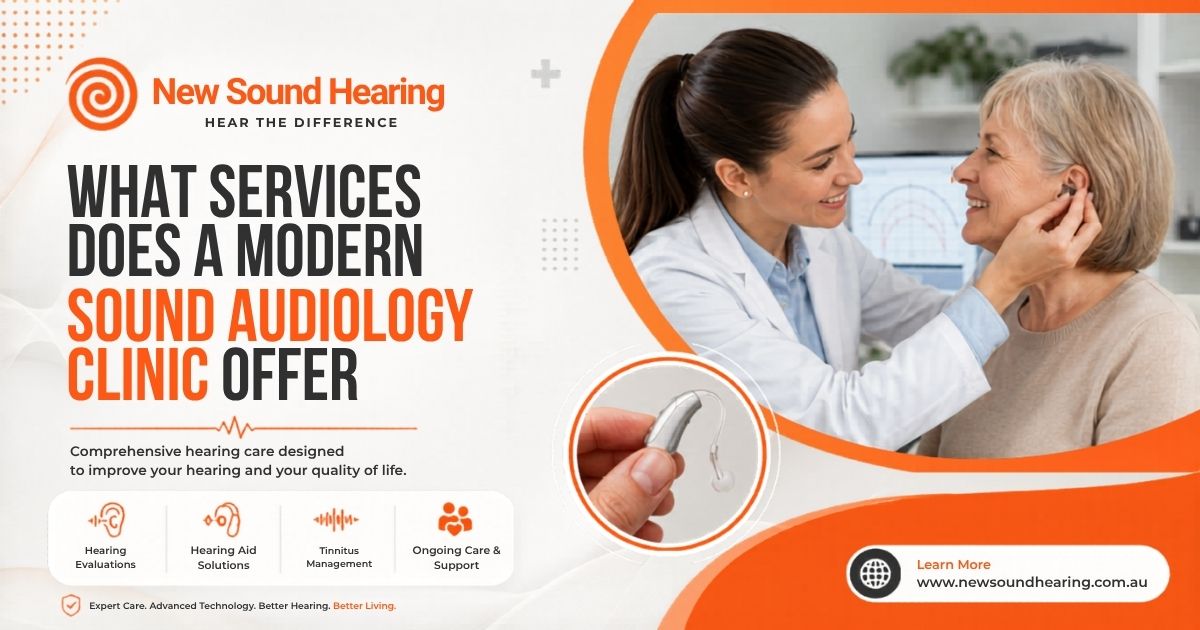
Hearing changes often happen slowly, so it is easy to put them down to “people mumbling” or “background noise being too loud”. But in reality, early support can make everyday life clearer, safer, and less tiring. A clinic that focuses on sound audiology helps you understand what is happening and what you can do next, without guesswork.
Many Australians also want solutions that fit real life, not just test results. That is where modern sound audiology services matter most: they combine clinical testing, technology, and long-term support so you can hear well at work, at home, and out in the community.
Modern Sound Audiology Clinics Start With Clear, Thorough Hearing Assessments
A modern clinic does not rely on a quick “can you hear this beep” check alone. A proper assessment is designed to find the cause, the pattern, and the impact of hearing changes, so your plan is based on facts rather than assumptions.
What Typically Happens In A Full Hearing Appointment
Most clinics will walk you through steps like these:
- A case history chat about symptoms, health, noise exposure, and day-to-day listening needs.
- Check of the ear canal and eardrum to rule out blockages or obvious issues.
- A hearing test using tones across different pitches and volumes.
- Speech testing to see how clearly you understand words, not just whether you detect sound.
- Results explanation with next steps, including whether devices, medical referral, or monitoring.
If you are comparing clinics, this is a good sign of quality: the audiologist explains results in a way you can repeat back in your own words.
Choosing The Right Sound Audiology Services Provider: What Matters Most
It is not just the devices; it is the process. A modern clinic should feel like a place where you are listened to, not sold to.
Signs You Are Likely To Get Good Outcomes
- They explain results clearly and invite questions.
- Match solutions to your real listening situations (work, family, social, driving)
- They discuss the pros and cons of options rather than pushing one brand.
- Offer follow-ups, not a one-off purchase.
- They support communication strategies for couples and families, not just the individual.
If you want a clinic that approaches hearing as a whole-life issue, New Sound Hearing in Australia offers hearing care designed to solve practical problems, with supportive guidance from assessment through to ongoing device care. You can explore our website and book online appointments.
New Sound Hearing: Audiology Services Go Beyond Hearing Aids
Hearing aids can be life-changing, but they are not the only support our New Sound Hearing clinic provides. Many people walk in thinking they “need hearing aids”, when the real need is diagnosis, reassurance, education, or a different assistive option.
Services You Can Expect In Our Clinic
Our well-rounded clinic often provides:
- Hearing aid selection based on your listening environments, dexterity, and budget.
- Device fitting and real-ear verification (checking the device output matches your prescription)
- Fine-tuning and follow-up support so you actually keep using your devices.
- Assistive listening devices for TV, group conversations, and noisy places.
- Earplug advice and hearing conservation support for work sites, music, and tools.
In Australia, this practical approach can be the difference between buying a device and actually improving communication at home and work.
Support For Tinnitus, Ringing, And Sound Sensitivity
Tinnitus is often described as ringing, buzzing, hissing, or a “cicada” sound that others cannot hear. It can be mild, or it can affect sleep, focus, and mental well-being.
What Tinnitus Care May Include?
- Tinnitus assessment to explore triggers, hearing profile, and daily impact.
- Education on what tinnitus is and why it can feel louder during stress or fatigue.
- Sound therapy options, including hearing aids that reduce contrast between tinnitus and silence.
- Practical coping strategies for sleep and quiet environments.
- Referral pathways when medical review is needed.
The key is not “promising a cure”, but offering realistic tools that reduce distress and help you regain control.
How Technology Has Changed New Sound Hearing Services in Australia?
Modern hearing technology is not just smaller; it is smarter. Devices can adapt automatically to different environments, connect to phones, and support clearer speech in noisy places when set up properly.
Modern Features
- Bluetooth streaming for calls and media.
- App controls for volume and listening programs.
- Directional microphones to improve speech in noise.
- Rechargeable options to avoid tiny batteries.
- Remote support in some cases, where settings can be adjusted without an in-person visit.
This is where a trusted provider matters. Technology is only as good as the assessment, fitting, and follow-up behind it.
NDIS, DVA, Medicare, and Private Health
Funding and rebates can be confusing, especially if you are supporting an older parent or you are new to hearing care. Our clinic assists you with paperwork, eligibility guidance, and explaining what is covered and what is not.
Typical Support Areas (Varies By Clinic And Eligibility)
- Helping you understand private health fund extras for audiology services.
- Explaining when a GP referral is helpful.
- Supporting eligible clients through DVA pathways.
- Advising on options if you are on a tight budget or need staged upgrades.
If a clinic is clear about costs and options from the start, it is usually a sign you are in good hands.
Quick Facts Table: Hearing Loss And Hearing Care (Australia And Global Context)
The following stats align with the World Health Organisation’s reporting on hearing loss burden and projections.
Fact | Stat | What It Means For Patients |
People globally living with disabling hearing loss | Over $430$ million | Hearing loss is common and worth checking early |
Projected global number with disabling hearing loss by $2050$ | Nearly $2.5$ billion | Demand for hearing care and prevention will keep rising |
People are expected to need rehabilitation for hearing loss globally | At least $700$ million | Hearing aids and support services will be increasingly normal |
FAQs
How do I know if I need a hearing test or just have earwax?
If speech sounds unclear, you struggle in noise, or others notice you asking “what?” often, a hearing test is worthwhile. Earwax can play a role, but testing confirms what is actually going on.
How much does a hearing test cost in Australia?
Costs vary by clinic and test type. Some offer free basic checks, while full diagnostic assessments are commonly paid. You can ask for a written quote and what is included before you book an appointment.
Can hearing loss be reversed?
Some causes are treatable, such as blockage or certain medical conditions, but many types of hearing loss are permanent. The good news is that modern hearing care devices often improve your hearing significantly.
What is the difference between an audiologist and a hearing aid dispenser?
An audiologist is university-trained to assess and manage hearing-related conditions like tinnitus or balance issues. While a dispenser focuses mainly on device fitting, both can help, but the scope and training differ.
Do hearing aids work for tinnitus?
For many people, yes. Hearing aids can reduce tinnitus awareness by improving hearing and providing gentle sound support. Results may vary, so a tinnitus assessment helps set realistic expectations.
Conclusion
Modern audiology clinics offer far more than basic hearing checks. Through advanced sound audiology practices, they provide complete care that covers diagnosis, treatment, prevention, and ongoing support. With a wide range of sound audiology services available, individuals can find solutions tailored to their needs.
Whether it’s managing hearing loss, protecting your ears at work, or helping a child develop strong communication skills, today’s clinics are equipped to help at every step. Choosing a trusted provider like New Sound Hearing ensures you’re not just treated but supported for the long term.